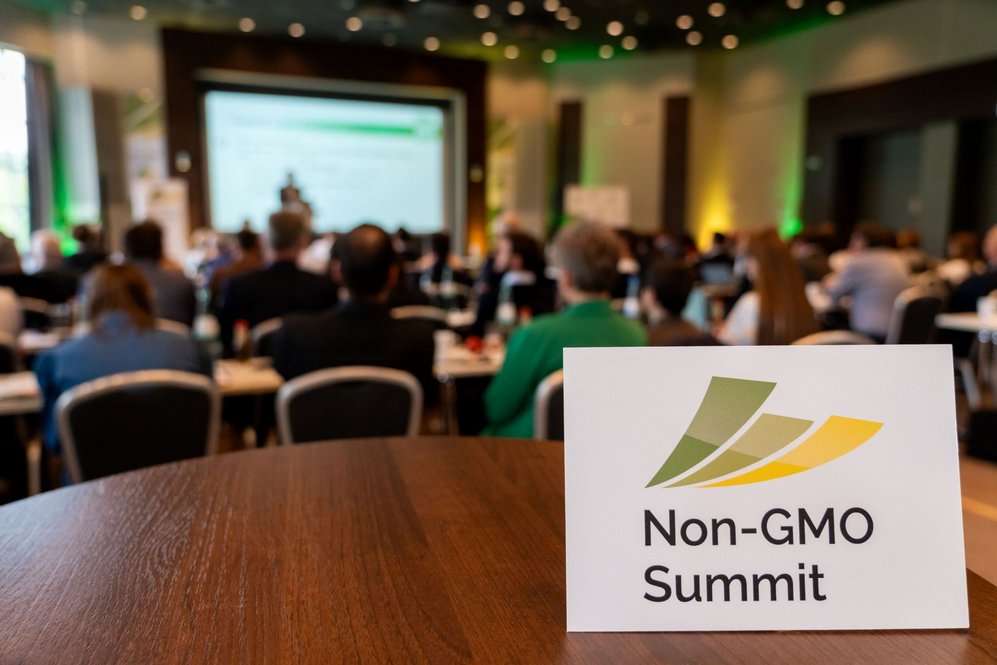
The presentations from experts covered many different aspects of the debate, but three key messages emerged: uncertainty about safety remains, detection methods are in the making, and consumer demand for transparency is high.
Scientific advances do not remove the need for risk assessment
Dr Margret Engelhard, Head of the Department for GMO Regulation at Germany's Federal Agency for Nature Conservation, challenged the fundamental claim of the EU’s deregulation proposal that category 1 New GMOs should automatically be regarded as equivalent to conventional breeding.
She highlighted how rapid advances in sequencing, DNA synthesis, automation and genome editing have dramatically expanded scientists' ability to modify genomes. She also stressed that understanding the effects of these changes on organisms and ecosystems is considerably more complex.
"The knowledge about the effects of these genetic changes in the organisms and the ecosystem is limited and risk assessment methods are not keeping pace," she warned. From her perspective, the precautionary principle remains fundamental and should continue to underpin the regulation of New GMOs.
A central message of her presentation was that "equivalence" with conventional breeding is not a criterion for safety. Similarity to conventionally bred plants does not automatically mean that risks can be excluded. Engelhard argued that maintaining individual case-by-case risk assessment before approval remains essential and cautioned that removing such requirements could create significant regulatory gaps, particularly as increasingly complex traits and AI-assisted DNA design enter the field.
New approaches are making detection possible
A vital question in the discussions about New GMOs is whether they can be identified and excluded from value chains. Presenting research carried out under the EU-funded DARWIN project, Dr Marie-Alice Fraiture, Senior Scientist at Sciensano, demonstrated that the answer is yes, although different analytical approaches are required.
Traditional GMO detection methods rely on identifying inserted DNA sequences. However, many genome-edited plants involve only very small changes, meaning that methods developed for classical GMOs are no longer sufficient.
To address this challenge, Fraiture and her colleagues have developed an approach based on identifying a unique genetic fingerprint, a distinct combination of single nucleotide variations (SNVs) that allows a specific NGT to be unambiguously identified. In order to detect these small modifications, access to the information about the specific SNV obtained with CRISPR/Cas is essential, as well as precise and detailed sequence information on the genomic background and large databases of known cultivars and varieties.
For Non-GMO value chains this is an important signal: detection and verification remain technically achievable. The ongoing debate should therefore address how these methods can be further developed and implemented.
Consumers continue to value transparency
Towards the end of the day, Prof. Dr Holger Buxel of FH Münster University of Applied Sciences focused on another critical dimension: consumers. Presenting the results of a representative survey conducted in Germany, he showed that around 80% of consumers are currently unaware that products derived from New GMOs may no longer be subject to mandatory GMO labelling under future legislation.
Yet once informed, respondents expressed clear preferences. More than 60% indicated that it is important to them that food products are produced without the use of New GMOs. Even more strikingly, almost four out of five respondents agreed that products should be clearly marked to indicate whether New GMOs have been used or not.
Consumers also expect both manufacturers and retailers to provide this information. According to Buxel, consumers do not distinguish between New GMOs and previous generations of genetically modified organisms. From their perspective, genetic modification is perceived as one category.
His findings also pointed to broader market implications. A lack of transparency creates uncertainty and may influence purchasing decisions, potentially increasing demand for organic and Non-GMO-labelled products.
At the same time, he highlighted a potential reputational risk for brands built around concepts such as quality, naturalness and authenticity. In the eyes of many consumers, the use of New GMOs does not fit with these values. This also, he pointed out, creates opportunities. Trusted voluntary labels, such as Germany's "Ohne Gentechnik" (without genetic engineering) label, are well placed to provide the transparency consumers are seeking.
Risk assessment, detection methods and transparency remain closely linked
As the entire food sector now prepares itself for the new regulation these three elements – on the one hand the rapid advancement of techniques and creation of New GMOs, and on the other hand improvements in detection methods, coupled with market demand for Non-GMO products – are likely to remain central to the future of Non-GMO value chains.
Far from diminishing their relevance, the changing regulatory landscape may reinforce the importance of credible verification systems and trusted Non-GMO labels. As Alexander Hissting, Managing Director of VLOG pointed out in his closing remarks of the Summit: “If GMO wheat, barley or bananas enter the market without labelling, I am curious to see who will be the quickest to apply the Non-GMO label to their bread, beer or baby food.”