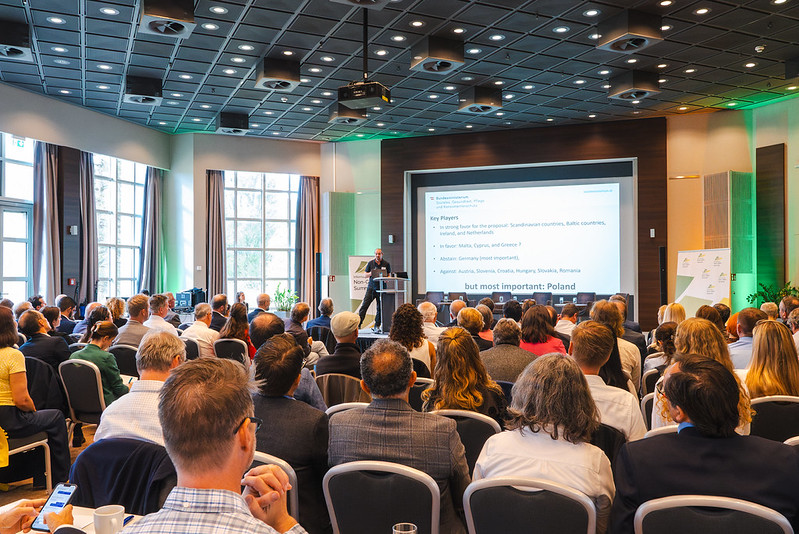
At this year’s Non-GMO Summit (13th May 2026, in Frankfurt), two key speakers will tackle this challenge head-on, bringing complementary scientific perspectives to the fore: what is the state of play in the development of detection methods and which New GMOs are present in different markets and in development pipelines?
Detecting New GMOs via a ‘genetic fingerprint’
Dr Marie-Alice Fraiture, Senior Scientist at Sciensano (Belgium), will present the latest state of play in the development of reliable detection methods.
With a background in biology and molecular and cellular biology, and a PhD focused on strategies to detect unauthorised GMOs in food and feed, Dr Fraiture is a leading expert in GMO detection. Her current research examines how to improve analytical tools that enable laboratories and operators to keep pace with rapidly evolving genome-editing techniques.
At the Summit, she will present a promising proof of concept for the unambiguous detection of genome-edited organisms. Her group developed a new approach to create a unique ‘genetic fingerprint’ to identify a New GMO, combining whole-genome sequencing, artificial intelligence and publicly available genome databases as well as a technique called high-throughput sequencing, which can examine many DNA sites simultaneously to search specifically for crucial DNA segments.
This work, developed in the context of the EU-funded DARWIN Project, demonstrates that detection is scientifically feasible – a breakthrough in supporting traceability and labelling of New GMOs in Non-GMO value chains.
The importance of market observation: where New GMOs are emerging
Which New GMOs must the Non-GMO sector deal with now or in the near future? This is where Eva Gelinsky, Freelance Scientist at semnar (Switzerland), brings critical insight.
Dr Gelinsky will present key findings from the upcoming New GMOs Market Report 2026 (jointly published by ENGA, semnar the Non-GMO Project) building on the 2025 edition. Her analysis maps which genome-edited crops are already cultivated in which countries and which are moving through development pipelines—information that is essential for Non-GMO producers, processors and retailers.
Preserving Non-GMO quality in the conventional and organic sectors
Together, these two sessions underline a central message of the Summit: Non-GMO production remains possible.
Reliable detection methods will support Non-GMO traceability and labelling, market stability, and help safeguard quality and consumer trust. Knowledge about New GMOs on the market enables risk analysis when sourcing raw materials: which plants from which countries do Non-GMO producers need to be concerned about? And which ones not?
Dr Fraiture and Dr Gelinsky’s contributions are just two highlights of an exciting programme that aims to shine a light on practical solutions for Non-GMO value chains.
Find the full programme here: https://www.nongmosummit.com/
Register here: https://www.eventim-light.com/de/a/6397260a9c9eb20bf98c0c7b/e/6901edefac6f162b51821311