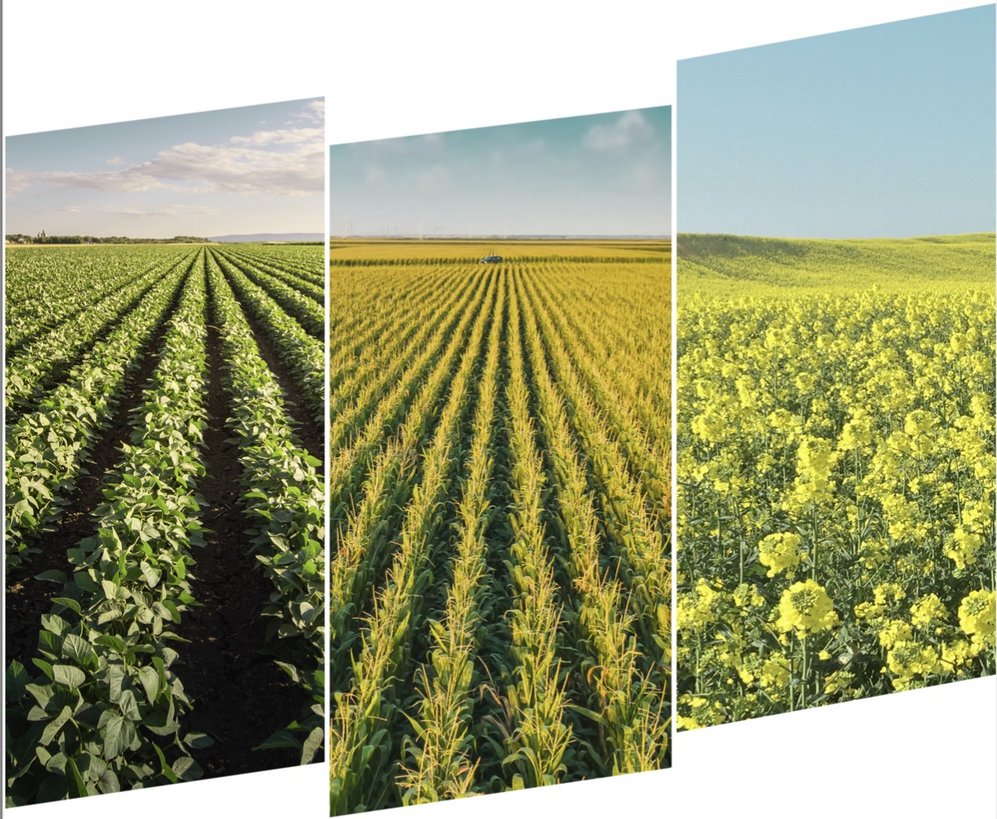
The latest ENGA market report, prepared in close cooperation with Donau Soja and ProTerra, reflects developments in Q1 2026 and points to a market that remains supplied overall, but with shifting supply dynamics. For Non-GMO operators, the key message is that supply remains available, but close attention to origin, regional availability and price developments is still needed.
Soy: availability remains uneven, while EU area is set to expand
Non-GMO soybeans remain available in the EU market, but supply conditions differ across regions. Availability is still adequate in Italy, while Central Europe is facing tighter conditions. DG AGRI forecasts EU-27 soy area at 1.03 million ha in 2026, the third-highest on record. All of it is Non-GM. EU-27 soy output is forecast to rise by 2.4% to 2.82 million t in 2026. High fertiliser prices, CAP and protein-crop support, and continued demand for GM-free and deforestation-free supply chains are all supporting soy planting.
Brazil continues to play an important role in supplying Europe’s Non-GMO soy chain, even though its Non-GM soybean production is expected to remain near the historically low level of around 1.5 million t in 2025/26. Even at this reduced level, Brazilian supply should remain sufficient to support European imports of certified Non-GMO soy products.
Soy prices have also moved higher in recent months. Non-GMO soybean prices at the Bologna Exchange rose strongly into mid-March before easing back by mid-April.
Maize: tighter than last year, but current volumes still appear sufficient
The EU Non-GMO maize market remains supplied, but the balance is tighter than a year ago. Lower deliveries from Ukraine, the EU’s key external Non-GMO maize supplier, have reduced available volumes, although these still appear sufficient for current Non-GMO programmes.
The longer-term production outlook for maize in the EU remains under pressure. DG AGRI expects maize area in the EU-27 to decline by a further 1.3% to 8.4 million hectares in 2026. Repeated drought and heat stress, especially in parts of South-Eastern Europe, have made maize a riskier crop, while higher fertiliser costs are also encouraging shifts towards less input-intensive crops.
Despite the expected reduction in planted area, output is forecast to recover moderately in 2026 if yields improve from the previous year. More than 99% of maize grown in the EU remains Non-GMO, with GM maize cultivation limited to Spain and Portugal.
Prices strengthened sharply in late February, supported by rising energy prices and geopolitical tensions, before easing slightly in April.
Rapeseed: comfortable, but some tightening later in the season is possible
The current Non-GMO rapeseed market remains comfortable. Availability of Non-GMO rapeseed meal in the EU is still adequate, although some tightening before the new harvest cannot be excluded.
The EU-27 produces only Non-GMO rapeseed, but remains structurally dependent on imports. For the 2026 harvest, DG AGRI expects rapeseed area to increase by 1.9% to 6.2 million hectares, supported mainly by relatively favourable rapeseed prices and margins compared with cereals. Even with larger area, output is forecast to decline slightly as yields normalise from the high levels seen last year.
Rapeseed prices have also risen in recent weeks, supported mainly by stronger crude oil prices and biodiesel sentiment. Looking ahead, rapeseed meal availability may tighten somewhat before the new harvest, partly because oil mills are expected to process more GM rapeseed from Canada and Australia.
The rapeseed market illustrates that sourcing remains important. While Non-GM remains the standard quality for rapeseed and rapeseed meal traded in the EU, the bloc is still structurally dependent on imports. DG AGRI expects EU-27 rapeseed imports to reach 5.9 million t in 2026/27, with Australia, Ukraine and Canada accounting for the main external supply. Given the differing prevalence of GM rapeseed in these origins, the composition of imports remains relevant for Non-GMO supply chains, especially when crushing demand increases.
Overall outlook: geopolitical tension and energy costs continue to shape the market
Overall, the Q1 2026 picture is one of continued Non-GMO availability in the EU, but with clearer differences between crops and regions. Soy supply remains workable but uneven, maize is tighter than a year ago due to lower Ukrainian inflows, and rapeseed remains comparatively comfortable for now. At the same time, higher energy costs and geopolitical volatility continue to influence prices and market sentiment.
For Non-GMO supply chains, this means the market remains functional, but not without pressure points. Regional availability, import dependence and price volatility will remain central factors in the months ahead.